
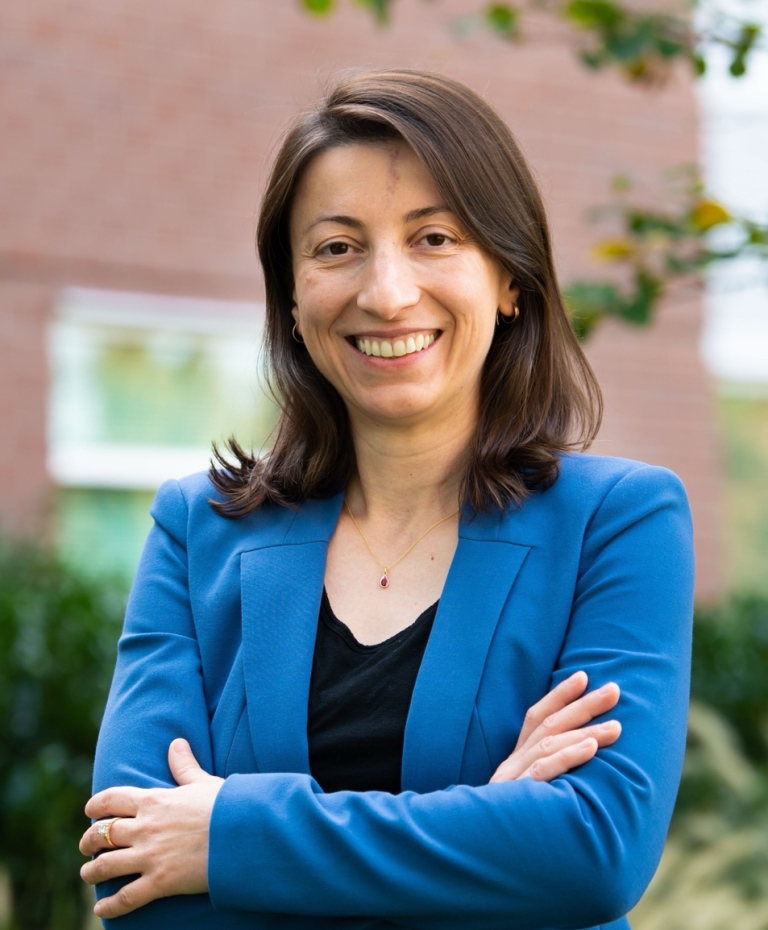
Drăguna VRABIE
Pacific Northwest National Laboratory, U.S.A.
Abstract
Bio
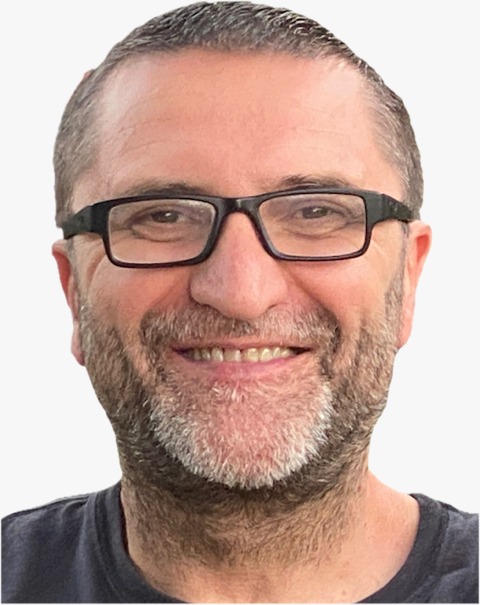
Călin BELȚA
University of Maryland, U.S.A
In control theory, complicated dynamics such as systems of (nonlinear) differential equations are mostly controlled to achieve stability and to optimize a cost. In formal methods, simple systems such as finite state transition graphs modeling computer programs or digital circuits are analyzed or controlled from specifications such as safety, liveness, or richer requirements expressed as formulas of temporal logics. Many current applications, such as dexterous robotic manipulation,
involve high-dimensional and partially known dynamical systems, which require machine learning techniques for motion planning and control. Ensuring safety and incorporating specifications given in rich, natural language within a learning-based system are challenging problems that have received a lot of attention recently.
In this talk, I will show how techniques based on control barrier and Lyapunov functions can be combined with temporal logics and reinforcement learning to address these challenges. I will use examples from robotic manipulation and autonomous driving.
Calin Belta is the Brendan Iribe Endowed Professor of Electrical and Computer Engineering and Computer Science at the University of Maryland, College Park, where is also part of the Maryland Robotics Center (MRC) and the Institute for Systems Researc h (ISR). His research focuses on making control and machine learning systems safe and Interpretable, with particular emphasis on robotics and systems biology. Notable awards include the AFOSR YIP, the NSF CAREER award, and the HSCC Test of Time award. He is a Fellow of the IEEE.
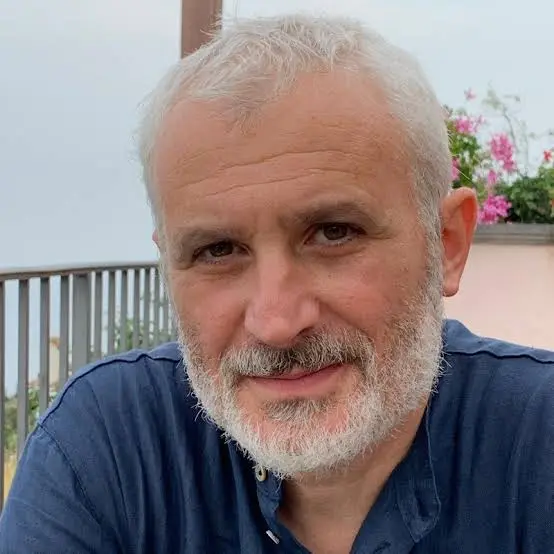
Ivano TAVARNELLI
IBM Research Europe Zurich, Switzerland
Abstract
Ivano Tavernelli is a Senior Research Staff Member at IBM Research Europe – Zurich and Global Leader for Advanced Algorithms for Quantum Simulations at IBM Research. His research focuses on the development of efficient and scalable quantum algorithms for applications in physics, chemistry, materials science, and related areas, targeting both near-term and fault-tolerant quantum computers.
He holds M.Sc. degrees in Biochemistry and Theoretical Physics and a Ph.D. from ETH Zurich. Following a Marie Curie Fellowship at the University of Cambridge, he continued his academic career at ETH Zurich and EPFL, where he became Maître d’Enseignement et de Recherche. He joined IBM Research – Zurich in 2014 and subsequently became a member of IBM’s quantum computing team.
His research spans quantum computing and quantum simulation, electronic-structure theory, quantum-classical molecular dynamics, and computational materials science. He has made significant contributions to quantum algorithms for the simulation of interacting fermionic systems and to the application of quantum computing to problems in chemistry, condensed-matter physics, and materials science.
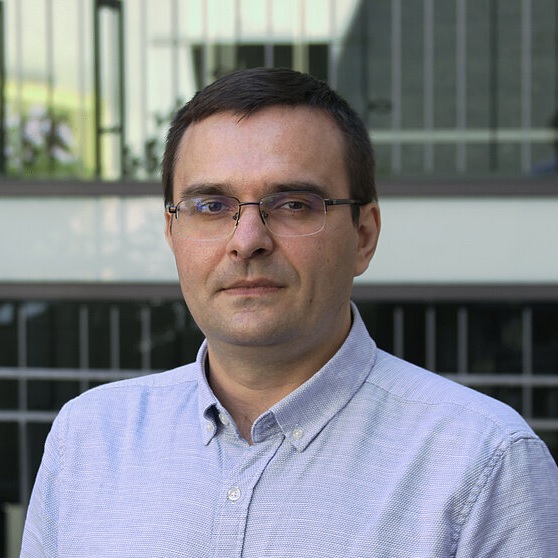
Radu TIMOFTE
University of Würzburg, Germany
Abstract
Radu Timofte is a Full Professor (W3) for AI and Computer Vision and a director of the ELLIS Unit Franconia at the University of Wurzburg. Previously, he worked at ETH Zurich as a postdoc (2013-2016) and a lecturer and research group leader (2016-2022). He earned his PhD degree from KU Leuven, in 2013. He serves(d) as an associate editor for top journals: CVIU, IEEE TPAMI, Elsevier Neurocomputing and SIAM Journal on Imaging Sciences. He regularly serves(d) as an (Senior) Area Chair/SPC for top vision and machine learning venues: ICCV, ECCV, CVPR, IJCAI, NeurIPS, AAAI, ICLR, ICML. Radu Timofte is part of the organizing teams of ICIP’26 (Tampere) and ECCV’28 (Bucharest). He and his team received multiple awards, including a 2022 Alexander von Humboldt Professorship Award and a 2021 Romanian Academy Award. He is co-founder of Merantix, co-organizer of NTIRE, CLIC, AIM, MAI, and AIS events, member of IEEE, CVF, and an ELLIS Fellow. His current research interests include augmented perception, mobile AI, multimodal learning, and image/video restoration and manipulation. As of June 2026, he has published over 250 papers, receiving over 86,000 citations with an h-index of 116.